Bangkok Air Quality Guide
PM2.5, burning season, masks, purifiers — everything you need to breathe well in Bangkok
Why Bangkok's Air Quality Matters
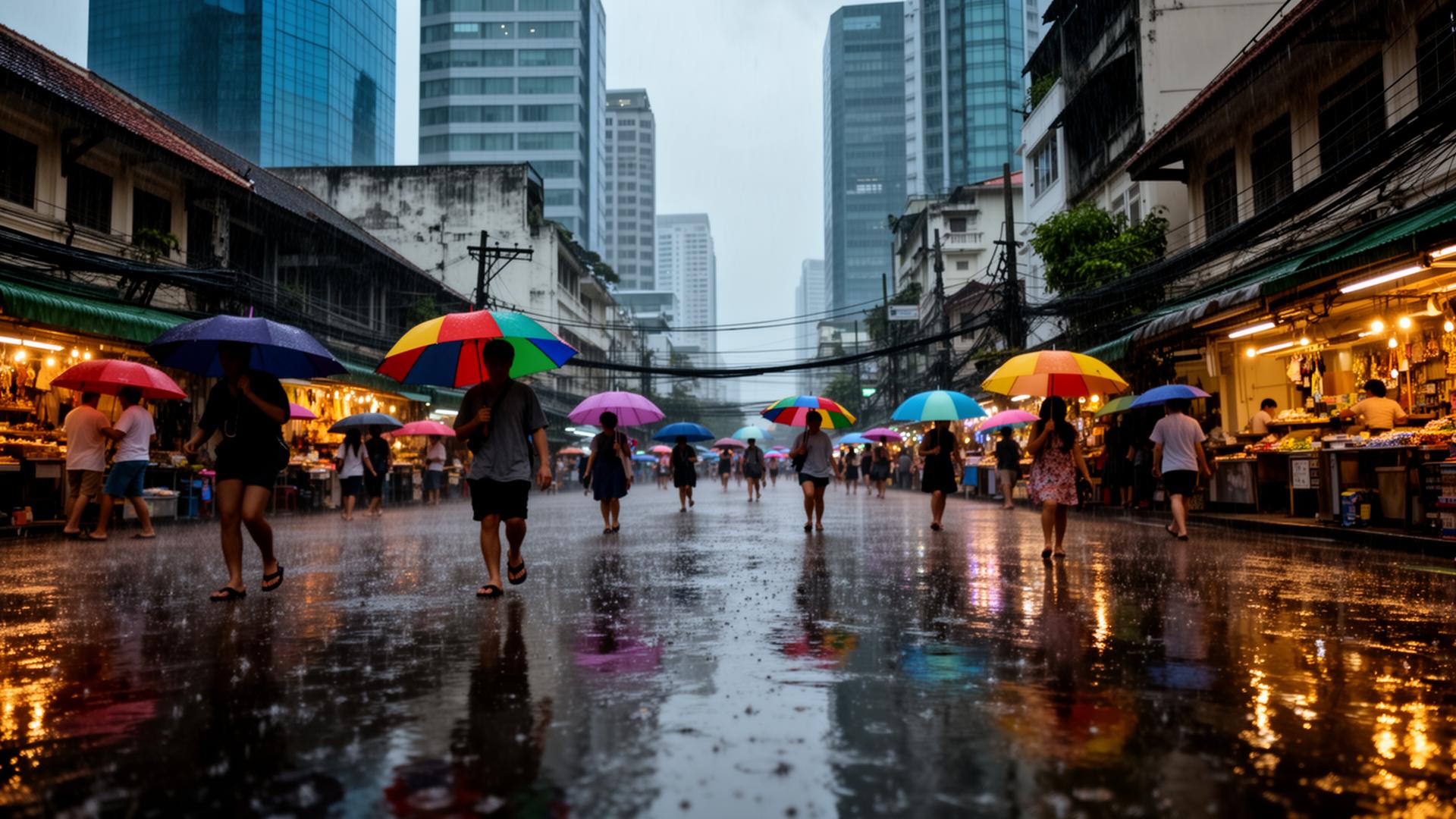
Bangkok has a serious seasonal air-quality problem and a quietly excellent year-round profile in equal measure. From May to October, monsoon rains wash particulate matter out of the air and the daily AQI for central Bangkok usually sits in the 'good' to 'moderate' range — easily breathable, no special precautions needed. From January to April, the dry season combines with agricultural burning across Thailand's central plains and northern provinces, plus regional transboundary pollution from Myanmar, Laos, and Cambodia, to drive PM2.5 levels several times above World Health Organisation guidelines. February and March are the worst weeks of the year.
The pollutant that matters most is PM2.5 — particulate matter under 2.5 micrometres in diameter. It's small enough to pass through the lungs into the bloodstream, and long-term exposure is linked to cardiovascular disease, lung cancer, stroke, and reduced life expectancy. Healthy adults can usually tolerate short visits during high-pollution days with N95 masks and air-conditioned indoor breaks. Children, the elderly, asthmatics, people with heart conditions, and pregnant women feel effects at much lower thresholds — for these groups, the burning-season weeks are genuinely worth planning around.
If you live in Bangkok, the practical setup is straightforward: install IQAir AirVisual on your phone, buy an air purifier with a true HEPA filter for the bedroom (4,000–8,000 THB gets a perfectly adequate Xiaomi unit), keep a pack of N95 or KF94 masks in your bag during the dry season, and check the AQI before any major outdoor activity from January through April. Residents who follow this routine report essentially no air-quality-related symptoms even in the worst weeks. Tourists visiting in burning season should add a 200–500 THB budget for N95 masks, prefer mall-based and indoor sightseeing during the highest-AQI days, and consider Phuket or Koh Samui as cleaner-air alternatives if symptoms develop.
AQI Levels — What to Do at Each
0–50
Good
All activities fine outdoors.
51–100
Moderate
Sensitive groups limit prolonged outdoor exertion.
101–150
Unhealthy for Sensitive Groups
Kids, elderly, asthmatics wear N95 outdoors.
151–200
Unhealthy
Reduce outdoor time, wear N95, run air purifier indoors.
201–300
Very Unhealthy
Avoid outdoor exercise entirely. Keep windows sealed.
300+
Hazardous
Stay indoors. N95 even for brief outdoor trips.
Monitoring Tools
IQAir AirVisual
Most popular AQI app in Thailand. Pulls data from government and community sensors. Free; iOS, Android, web.
air4thai.com (Thai Government)
Official source from the Thai Pollution Control Department. Less polished but the regulatory source of truth.
AirGradient
Open community dashboard with neighborhood-level granularity, useful for picking which area of Bangkok is least affected.
Apple Weather / Google Weather
Built into your phone. Simple AQI badge — good enough for daily go/no-go decisions if you don't want another app.
If you have asthma or a heart condition
Talk to your doctor before travel in burning season (Jan–Apr). Carry your regular medication, an additional rescue inhaler, and a written treatment plan. Bumrungrad Hospital, Bangkok Hospital, and Samitivej all have English-speaking respiratory specialists and pulmonologists if you need help during your stay.
You Might Also Like
Sources & official references
- IQAir — Bangkok — Live AQI and PM2.5 dashboard
- Air4Thai (PCD) — Pollution Control Department official AQI
- Thai Meteorological Department — Weather and air-quality forecasts
- World Air Quality Index — Bangkok — Aggregated multi-source AQI